Important notice: This article is for general informational purposes only. It does not constitute legal advice. Laws and their application vary by country and circumstance. If you have specific legal concerns, consult a qualified intellectual property solicitor in your jurisdiction.
It is one of the most Googled questions in the designer furniture world — and one of the least honestly answered. Most articles on this topic are either written by sellers who have an interest in reassuring you that everything is absolutely fine, or by journalists who paint a simplified black-and-white picture that does not reflect how European law actually works in practice.
2026 Legal Snapshot: Are Replicas Legal?
- For Buyers: Yes. Purchasing a replica for personal use in your home is not targeted by EU copyright enforcement.
- The Law: Eames designs are protected by EU copyright until 2058 (70 years after Ray Eames’ death).
- The 2024 Ruling: The CJEU confirmed that Eames designs are protected in all 27 EU states regardless of their US origin.
- The Difference: “Counterfeits” (fakes sold as originals) are illegal. “Reproduction/Inspired” pieces sold transparently occupy a different legal space.
This guide gives you the complete, accurate picture — including a landmark European court ruling from October 2024 that changed how EU copyright law applies to replica furniture, and what it means for buyers and sellers in 2026. We cover what is protected, what is not, who is at risk, and what the difference is between a replica and a counterfeit.
At eames-chair.com, we sell Eames-inspired reproductions. We say so clearly, on every page, in every product description. We do not use the Eames name as a brand claim. We do not use Herman Miller or Vitra trademarks. We do not imply our pieces are licensed originals. That transparency matters — legally, ethically, and practically — and this article explains exactly why.
Are Eames Chair Designs Protected by Copyright?
Yes. In the European Union, Eames chair designs are protected — and a landmark ruling from October 2024 confirmed and strengthened that protection significantly. Understanding this ruling is essential to understanding the current legal landscape for replica furniture in Europe.
3D Trademarks vs. Copyright Protection
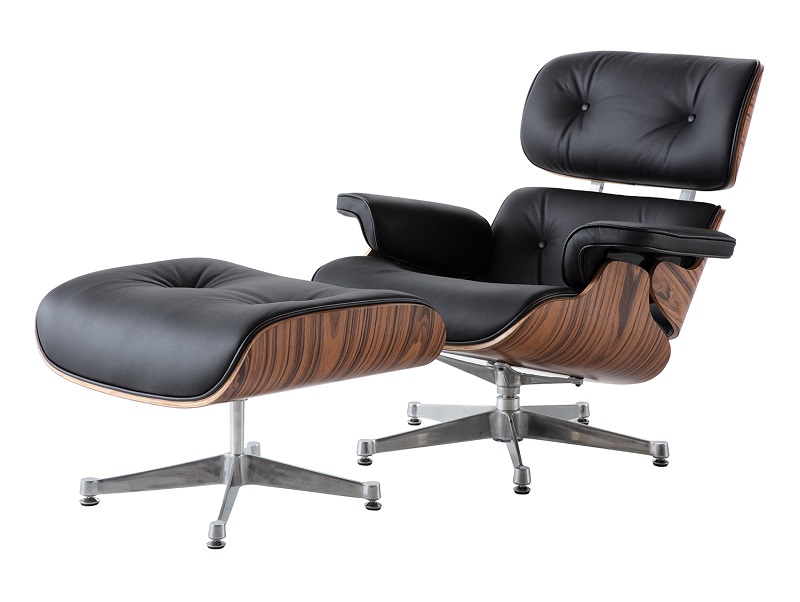
In addition to copyright, certain elements of the Eames designs are protected under Trademark Law. While copyright protects the “artistic work,” a 3D Trademark protects the specific shape of the chair if that shape is so famous it acts as a brand. Vitra has successfully argued in several European jurisdictions that the silhouette of the Eames Lounge Chair is a registered trademark.
This is why reputable sellers of reproductions focus on “Eames-inspired” designs. By acknowledging the design as an inspiration rather than a direct copy of a trademarked silhouette, sellers maintain a clearer legal distinction. For the buyer, this means the chair you receive is an homage to a classic shape, but it is legally categorized as a new production inspired by a historical aesthetic.
The Kwantum v. Vitra Ruling — October 2024
On 24 October 2024, the Court of Justice of the European Union delivered its judgment in Kwantum v. Vitra (Case C-227/23). This was a landmark case involving Kwantum, a Dutch and Belgian furniture retailer, and Vitra, the Swiss company that holds the intellectual property rights to Eames designs in Europe.
Kwantum had been selling a chair it called the “Paris Chair” — a design that Vitra argued closely imitated the Eames DSW (Dining Sidechair Wood). Kwantum’s defence relied on a technical point: the Eames chair originated in the United States, and US copyright law does not extend the same level of protection to industrial furniture designs as European law does. Under an old provision of the Berne Convention — the international copyright treaty — member states could arguably deny copyright protection to applied art from countries that did not offer equivalent protection themselves.
The CJEU ruled clearly against this argument. The court held that EU copyright law — specifically the InfoSoc Directive (Directive 2001/29/EC) — takes precedence over the Berne Convention’s reciprocity provision. This means that any work of applied art that qualifies as a “work” under EU copyright standards is protected throughout all EU member states, regardless of the country it originates from or the nationality of its designer.
In plain language: Eames chair designs, though created by American designers, are fully protected by EU copyright law across all 27 member states. Vitra, as the holder of those rights in Europe, can enforce that protection against infringers.
What Vitra’s Rights Cover in Europe
Vitra holds the rights to manufacture and distribute Eames-designed furniture throughout Europe and the Middle East. Their protection includes copyright in the designs themselves and registered trademarks covering the Eames Lounge Chair and other key designs. The “Eames” name is also a protected trademark. Vitra states explicitly on their website that the Eames Lounge Chair design and the Eames Aluminium Chair design are registered trademarks.
How Long Does This Protection Last?
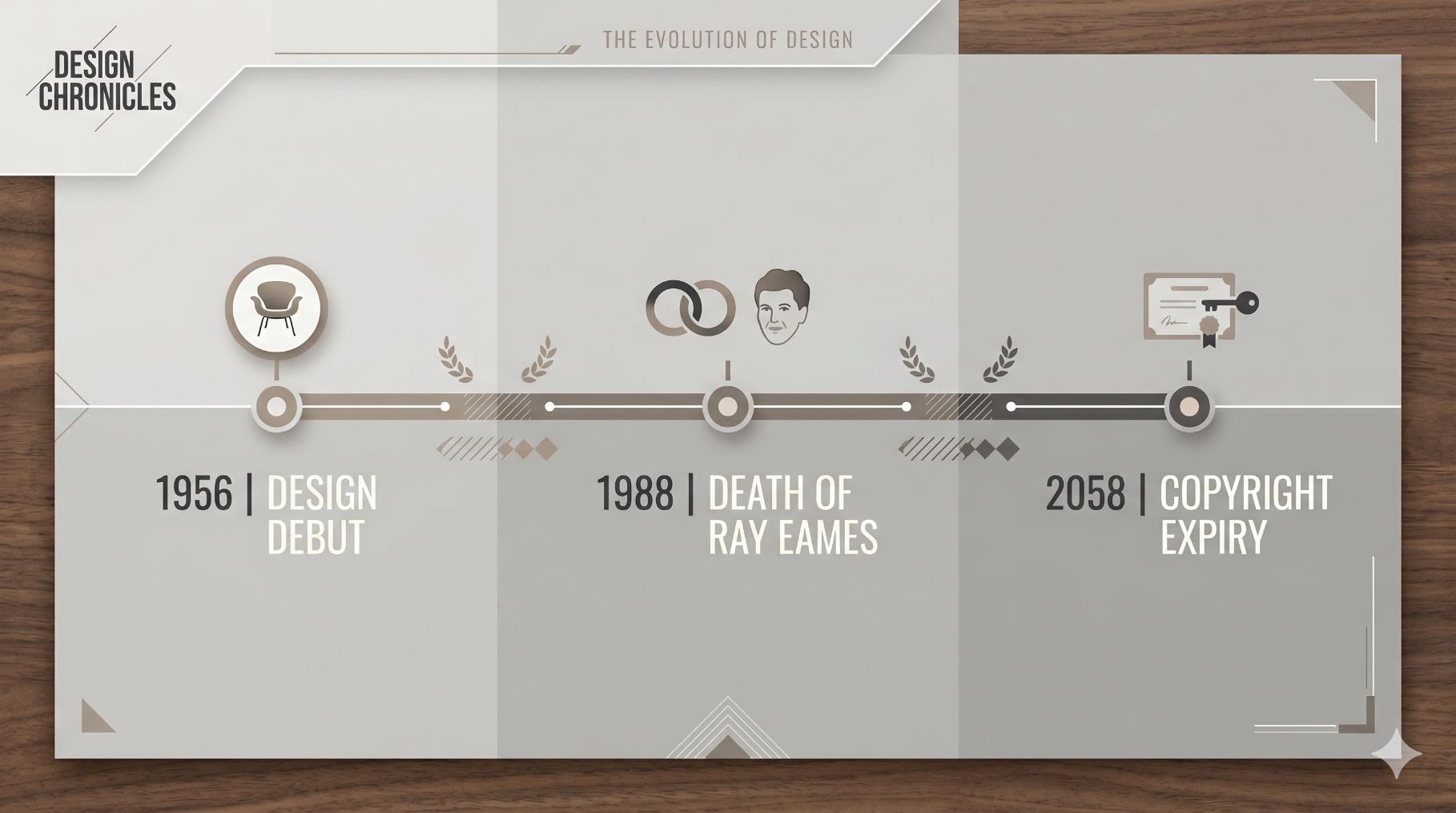
In the EU, copyright in applied art — including designer furniture — lasts for 70 years after the death of the creator. Charles Eames died in 1978. Ray Eames died in 1988. This means that EU copyright protection for their jointly created designs extends at least to 2058 (70 years after Ray’s death in 1988). Design trademark protection can extend indefinitely if renewed.
What Is the Legal Status of Replica Furniture in Europe?
This is where the picture becomes more nuanced — and where most other articles fail their readers by being too simplistic in either direction.
For Buyers — Purchasing for Personal Use
Across the EU, purchasing a replica chair for personal home use is not targeted by copyright enforcement. EU copyright law is directed at commercial actors — manufacturers, importers, distributors, and retailers — not at individual consumers purchasing items for their own homes. No European consumer has faced legal action for buying a replica chair for personal use, and this is not something the law is designed or enforced to address.
This does not mean replicas are “legal” in an absolute sense — the underlying design protection exists. It means that enforcement is directed at commercial activity in the supply chain, not at the end consumer sitting in a chair in their own living room.
For Sellers — A More Complex Picture
The legal situation for sellers of Eames-inspired furniture in Europe is considerably more complex, particularly after the Kwantum v. Vitra (Case C-227/23) ruling in October 2024. This ruling removed the “Berne Convention loophole” that some sellers previously used. It is now established that if a work of applied art (like an Eames chair) qualifies for protection in one EU state, it is protected in all of them. This means sellers cannot simply ship from a country with “weaker” laws to a country with “stronger” laws; the protection is now a unified “EU Block.”
The key legal distinction that determines risk for sellers centres on several factors: how closely the product copies the original design, what claims are made in marketing and product descriptions, whether protected trademarks are used, and whether the product is presented as an inspired piece or as an imitation of the specific protected design.
Reputable sellers of Eames-inspired furniture operate in the market by being transparent about what they sell — using terms like “inspired by,” “in the style of,” or “reproduction” — and by not using the Eames name, Herman Miller branding, or Vitra trademarks in ways that could mislead buyers into thinking they are purchasing a licensed original.
The Difference Between a Replica and a Counterfeit
This distinction is perhaps the most important concept in this entire article. The words “replica,” “reproduction,” “counterfeit,” and “fake” are often used interchangeably in casual conversation. Legally and practically, they are very different things.
A Counterfeit — Clearly Illegal, Everywhere
A counterfeit is a product that is presented as something it is not. A counterfeit Eames chair would use Herman Miller or Vitra branding, carry the Eames name as a brand claim, include fake authenticity labels, or otherwise deceive a buyer into believing they are purchasing a licensed original. Counterfeiting is illegal throughout the EU, the UK, and virtually every jurisdiction in the world. It involves trademark fraud, deceptive trading, and in many cases criminal liability.
Counterfeit furniture is a genuine problem — but it is distinct from what reputable reproduction sellers do, and it is important not to conflate the two.
A Transparent Reproduction — A Different Category
A transparent reproduction is a chair inspired by a famous design, sold clearly as a reproduction, without using the original designer’s name as a brand, without claiming licensed status, and without any attempt to deceive the buyer. The buyer knows what they are buying. No trademarks are misused. No false claims are made.
This is the category in which eames-chair.com operates. Every product we sell is described as an Eames-inspired or Eames-style reproduction. We use terms like “inspired by Charles and Ray Eames” to acknowledge design heritage — not to claim authorisation. We do not use Herman Miller or Vitra branding. We do not claim our products are licensed originals. We do not suggest they carry the designers’ endorsement.
The legal risk profile of a transparent reproduction seller is meaningfully different from that of a counterfeiter — though the post-Kwantum environment has made it clearer that even transparent sellers need to be careful about how closely their products replicate specific protected designs, and how they describe them.
What Terms Are Safe to Use — and What to Avoid
Whether you are a buyer wanting to understand what you are purchasing, or simply someone researching this area, understanding the language used in this market is genuinely useful.
Terms That Describe Transparently (Generally Safer)
- “Eames-inspired” — describes design heritage without claiming authorisation or licence
- “Eames-style” — signals the design aesthetic without trademark misuse
- “Inspired by Charles and Ray Eames” — historical attribution without ownership claim
- “Mid-century modern lounge chair” — describes the style category
- “Premium reproduction” — clearly signals the product is not an original
- “Designer-inspired chair” — acknowledges influence without claiming the design
Terms That Create Legal and Ethical Risk
- “Genuine Eames chair” — implies licensed authenticity; clearly misleading
- “Original Eames lounge chair” — false if the product is not from Herman Miller or Vitra
- “Herman Miller Eames chair” — direct trademark misuse if the product is not a Herman Miller product
- “Authentic Eames” — implies certification or licensing that does not exist
- “Licensed reproduction” — false if no licence has been obtained from the rights holders
- The Eames name used as a direct product brand claim — risks trademark infringement
At eames-chair.com, we use only the first category. Our products are Eames-inspired reproductions sold with full transparency. If you read our product descriptions and our about page, there is no ambiguity about what you are buying.
The UK Position — Different from the EU Post-Brexit
For completeness, it is worth noting that the United Kingdom’s position differs from the EU since Brexit. The October 2024 CJEU ruling is not directly binding on English courts. UK copyright law under the Copyright, Designs and Patents Act 1988 provides 70 years of protection after the death of the creator — the same duration as the EU standard — but English courts are not required to follow the CJEU’s interpretations of EU law.
The practical enforcement picture in the UK is shaped by UK trading standards and intellectual property law rather than the EU framework. However, the underlying protections remain substantial, and sellers in the UK are still exposed to risks similar to those in the EU if they replicate protected designs too closely or use protected trademarks without authorisation.
Frequently Asked Questions
Is it legal to buy a replica Eames chair in Europe?
For personal home use, yes. EU copyright enforcement is directed at commercial actors — manufacturers, importers, and retailers — not at individual consumers purchasing a chair for their own home. No European consumer has faced legal action for buying a reproduction chair for personal use, and there is no reason to expect this to change. If you buy a transparently sold Eames-inspired reproduction from a reputable seller for your own home, you are not in a legally risky position.
Is the Eames lounge chair protected by copyright in 2026?
Yes. The October 2024 CJEU ruling in Kwantum v. Vitra (Case C-227/23) confirmed that Eames chair designs are protected by EU copyright law across all 27 EU member states. The copyright lasts 70 years after the death of the creator — meaning protection for Eames designs created with Ray Eames extends to at least 2058. The “Eames” name and key design configurations are also protected as registered trademarks held by Vitra in Europe.
What is the difference between buying and selling a replica in terms of legal risk?
The difference is substantial. Individual buyers purchasing for personal use are not the target of copyright enforcement in the EU. Commercial sellers, manufacturers, and importers who replicate protected designs are potentially exposed to intellectual property claims, particularly after the strengthened EU position established by the 2024 CJEU ruling. Transparent reproduction sellers who clearly describe their products as inspired pieces and avoid trademark misuse operate in a different risk category from outright counterfeiters — but the legal landscape is complex and continues to evolve.
Are all replica furniture pieces illegal in Europe?
Not automatically. The legal status depends on a combination of factors: whether the specific design is still within its copyright protection period, how closely the product replicates the original, what claims are made in marketing, and whether any trademarks are misused. Some classic designs have entered the public domain in certain jurisdictions. Others — including key Eames designs — are still within protection periods and are actively enforced by their rights holders in Europe. The picture is not uniform across all designer furniture.
What happened in the Kwantum v. Vitra case?
This was a landmark European Court of Justice case decided on 24 October 2024. Vitra, which holds the EU rights to Eames designs, sued Kwantum — a Dutch and Belgian furniture retailer — for selling a chair that closely imitated the Eames DSW design. Kwantum argued that because the Eames designs originated in the United States, and US law does not extend full copyright protection to industrial furniture designs, EU member states could apply a “reciprocity” exception under the Berne Convention and deny copyright protection. The CJEU rejected this argument entirely, ruling that EU copyright law as set out in the InfoSoc Directive takes precedence, and that all qualifying works of applied art are protected throughout the EU regardless of their country of origin. This ruling strengthened Vitra’s position and the broader legal protection for designer furniture rights holders in Europe.
Does eames-chair.com sell licensed Eames chairs?
No. We sell Eames-inspired premium reproductions. We are not affiliated with Herman Miller, Vitra, or the Eames estate. We do not manufacture or sell licensed originals. Our products are described clearly as reproductions or inspired pieces throughout our website, and we do not use the Eames name as a brand claim or suggest our products are authorised. The licensed original Eames lounge chair in Europe is sold exclusively by Vitra, starting at approximately €6,500. If you are interested in a premium reproduction at a fraction of that price, explore our Eames lounge chair replica collection. If you are interested in Eames-style office chairs, see our Eames-style office chair range.
Is the Eames lounge chair patented?
The original patents on the Eames lounge chair’s specific construction methods have long expired — patents typically last 20 years. However, copyright in the overall design as a work of applied art remains active in the EU (until at least 2058), and key design configurations are also registered as trademarks by Vitra. So while the specific manufacturing patents have expired, the design is still substantially protected through other intellectual property routes in Europe.
Is the Eames name a trademark?
Yes. The name “Eames” is a registered trademark. This is a critical legal point. While a design can be “inspired by” the work of Charles and Ray Eames, a seller cannot use “Eames” as the primary brand name for a product they manufactured themselves. At eames-chair.com, we use the term “Eames-inspired” or “Eames-style” to describe the design category, ensuring we respect trademark boundaries while helping customers find the aesthetic they love.
The Bottom Line — Honest and Clear
Here is the straightforward summary of where things stand in 2026:
- Eames chair designs are protected by EU copyright law, confirmed by a landmark October 2024 CJEU ruling.
- Vitra holds the EU rights and has both copyright and trademark protection over key Eames designs in Europe.
- Buying a replica Eames-inspired chair for personal use is not targeted by EU copyright enforcement.
- Selling reproductions that closely replicate protected designs carries legal risk in the EU, particularly post-Kwantum.
- The critical distinction is between transparent reproductions — sold honestly as inspired pieces — and counterfeits sold deceptively as originals.
- Misusing the Eames name as a brand claim, or using Herman Miller or Vitra trademarks, is a separate and clear legal risk regardless of copyright status.
At eames-chair.com, we operate transparently. We sell Eames-inspired reproductions and say so clearly. We believe buyers deserve honest information — both about what they are buying and about the legal context surrounding this market. We hope this article has provided that.
To explore our range: Eames lounge chair replicas and Eames lounge chair and ottoman replicas. All products described transparently. EU delivery included.
This article is for general information only and does not constitute legal advice. Laws vary by jurisdiction and are subject to change. For specific legal guidance, consult a qualified intellectual property solicitor.