
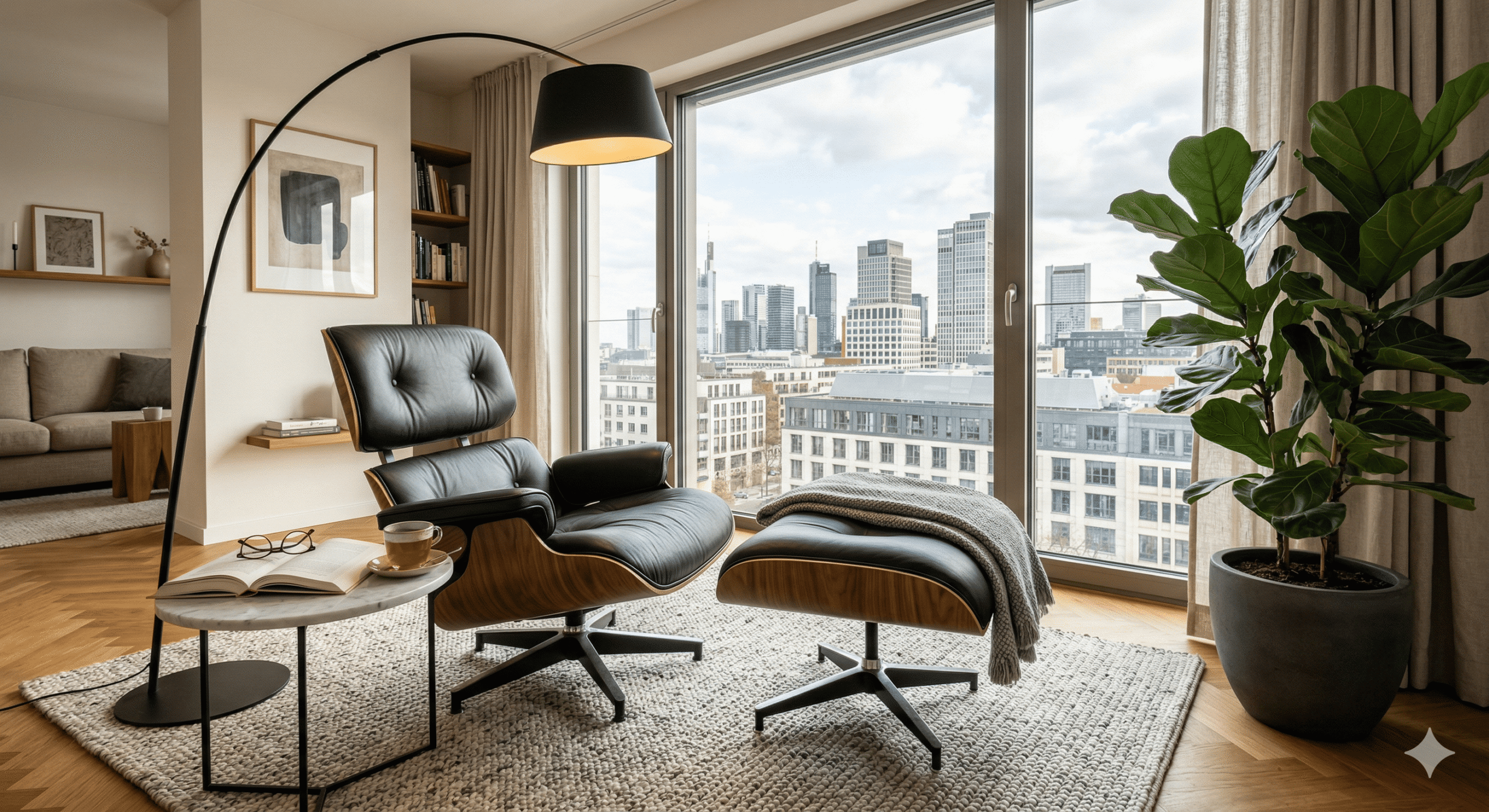
You have just brought home the most iconic chair in furniture history — or you are about to, and you want to know exactly how to make it look the way it does in every beautifully photographed interior you have ever saved. You are not alone in that moment. The Eames lounge chair is one of those pieces that makes a room look extraordinary when it is placed and accessorised thoughtfully, and merely expensive when it is not
Quick Summary for Busy Decorators:
- The Rule of 45: Angle the chair 30–45 degrees off the wall for the best look.
- The Lighting Secret: Use 2700K–3000K (warm) light to make the wood and leather “pop.”
- Space Saver: In small flats, use the chair to replace a second sofa, not add to it.
This guide is written for real homes — compact European apartments, open-plan flats, home offices with personality, and bedrooms that deserve more than a standard armchair in the corner. Every idea here is specific, actionable, and based on what actually works rather than what looks good only in a five-hundred-square-metre penthouse.
Whether you already own an Eames-inspired lounge chair or are still in the process of choosing one, you will find something genuinely useful here. And if you are at the choosing stage, our Eames lounge chair replica collection has every combination of leather and wood that appears in the styling ideas below — with the ottoman always included.
Let us get into it.
First — Understand What the Chair Does to a Room
Before any specific tips, there is one thing that changes everything: the Eames lounge chair is what interior designers call a “hero piece.” It does not need to be dressed up or surrounded by matching items. It does not need to justify itself. It just needs space and one or two thoughtful companions — and then it takes over the room in the best possible way.
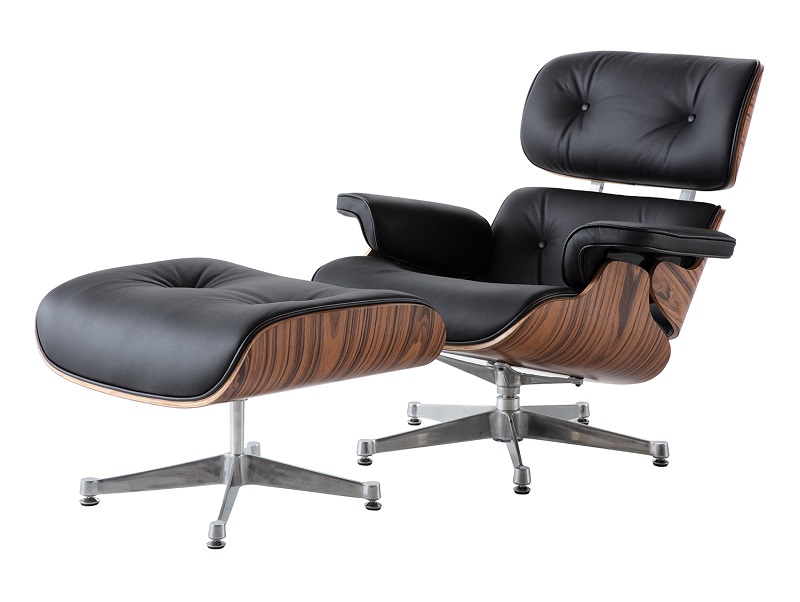
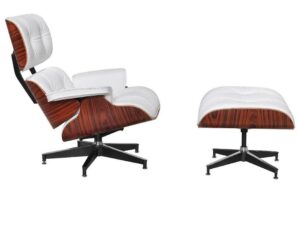
The chair’s visual lightness is its most misunderstood quality. Despite being substantial and comfortable, it has almost no visual weight. The three-section plywood shell, the slender aluminium base, the leather cushions — none of it feels heavy in a room. This means it works in small spaces as well as large ones. It does not fill a room. It inhabits it.
Keep this in mind as you work through the styling ideas below. The goal is not to complete the chair. It already is complete. The goal is to give it the right context.
1. The Classic Reading Corner — Still the Best Placement
There is a reason every interior designer’s first instinct for the Eames lounge chair is a reading corner — and that reason is simple: it works perfectly every single time.
Here is the specific setup that works best. Position the chair at a slight angle — never flat against a wall, never parallel to a sofa. Thirty to forty-five degrees off the wall is the sweet spot. This opens the chair toward the room while keeping it visually contained in the corner.
Add an arc floor lamp positioned slightly behind and above the right shoulder (or left, depending on which hand you read with). The arc lamp does two things simultaneously — it provides functional reading light and it frames the chair visually, creating a composition rather than just a piece of furniture in a corner.
A small round side table at elbow height completes the setup. Solid wood or marble work best — nothing too large, nothing too visually busy. The side table is there for a book, a glass, or a cup of tea. It should not compete with the chair.
What to put on the wall behind? Nothing is a perfectly valid answer. An empty wall of good quality paint or wallpaper is often more powerful than artwork. If you do want something on the wall, a single large-format photograph or abstract print works well. Avoid gallery walls directly behind the chair — too much visual noise at the most important focal point in the room.
2. Styling for Small European Apartments — Making It Work in Compact Spaces
This is the styling challenge nobody else addresses properly. Most guides assume you have a sprawling open-plan living room with room to place furniture at dramatic angles. Most European apartments do not. Most European apartments have rooms that are fifteen to twenty-five square metres, with low ceilings, and furniture that has to work hard for its floor space.
The good news is that the Eames lounge chair was designed in 1956 for post-war American homes that were considerably smaller than the grand spaces of the previous generation. It fits compact rooms naturally. Here is how to make it work when space is genuinely limited:
- Replace a second sofa, not add a chair. In a small living room, the Eames lounge chair is most powerful when it replaces what would otherwise be a second sofa or a forgettable armchair. It gives you a seat of equal or superior comfort in a smaller footprint — and a vastly more interesting visual contribution to the room.
- Use vertical space to compensate. In low-ceiling rooms, keep the furniture beside the chair low and horizontal — a low bookshelf, a floor lamp rather than a table lamp, a slim side table. This creates a sense of deliberate proportion that makes the chair look placed rather than squeezed.
- Angle toward a window, not toward the television. In a small apartment, positioning the chair facing the television puts it in competition with the sofa and creates a cramped, directive feel. Angle it toward a window instead. This creates a distinct second zone in the room — one for watching, one for reading — even within a small floor plan.
- The ottoman is your friend in small spaces. Counter-intuitively, the ottoman actually helps in compact rooms. It fills the floor space that would otherwise feel empty in front of the chair, and it defines the chair’s zone clearly without needing a rug or other defining element. Use it.
3. The Colour-Matched Accessory Guide — What to Put Around Each Leather Finish
This is the section competitors always skip. Every styling guide tells you to “add warm tones” or “use neutral accessories.” Here is the specific guidance for each leather colour — because a tan brown chair needs different companions than a white or black one.
Black Leather — Pair with Natural and Raw Materials
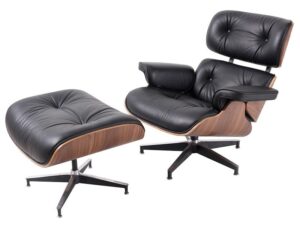
Black leather is architectural and bold. The danger is that it reads as cold if the surrounding room is too neutral or too sparse. Balance it with materials that have warmth and texture — raw linen cushions on the sofa, a jute or wool rug underfoot, a warm brass or matte black floor lamp, and at least one substantial plant nearby. The contrast between the precision of the chair and the organic quality of these materials is where the room comes alive.
Tan Brown and Cognac — Lean Into Warm Neutrals and Natural Wood
Tan leather is generous. It suits rooms that have already committed to warm, natural materials — wooden floors, linen curtains, beeswax-finished shelving. Avoid anything too cold or too white directly beside it. A cream or sand-coloured rug grounds the setup beautifully. Warm-toned artwork — watercolours, botanical prints, warm abstract canvases — works far better than graphic geometric prints beside this leather colour.
White Leather — Everything Must Be Intentional
White leather is unforgiving of clutter and carelessness. The room around it needs to be edited — fewer things, better things. A clean white or plaster-grey wall, a minimal side table with nothing on it except a single beautiful object, a sculptural floor lamp with clean lines. One indoor plant with large, simple leaves — a fiddle-leaf fig, a bird of paradise, or a simple olive tree — adds life without breaking the visual calm.
Brown and Chocolate — Rich, Layered, and Warm
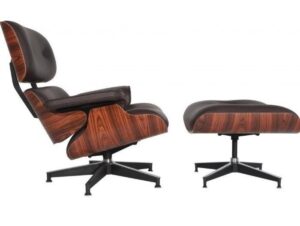
Dark brown leather suits rooms with depth and layering. Deep-toned rugs, warm lighting, heavy linen curtains, a credenza with interesting objects on it. This version of the chair particularly loves a room with some history to it — exposed brick, aged wood, vintage objects alongside contemporary pieces. Do not be afraid to put dark beside dark. A chocolate brown chair against a deep teal or forest green wall is one of the most satisfying combinations in mid-century modern interior design.
4. Lighting — The Detail That Transforms Everything
If there is one thing that makes the difference between a chair that looks good and a chair that looks extraordinary, it is the light beside it. Not around it. Beside it.
Table of Contents
The arc floor lamp is the classic companion and the reason it works is physics, not fashion. An arc lamp positioned above and slightly behind the chair creates a pool of light that falls directly onto a book or a lap — exactly where it needs to be — while also creating a visual halo effect around the chair that makes it look like the centrepiece of a deliberate composition.
Avoid overhead lighting directly above the chair. Ceiling spotlights pointing downward flatten the leather and the veneer — they make expensive materials look cheaper than they are. The Eames lounge chair looks its best in warm, directional, low-level light. Tungsten or warm LED (2700–3000 Kelvin) is the right colour temperature. Anything cooler makes the leather look flat and the wood grey.
For evening use specifically, a dimmable floor lamp beside the chair is the single most effective upgrade you can make to any reading or relaxation setup in your home.
5. The Perfect Reading Nook — Step by Step
This deserves its own section because it is the most requested setup — and because the competitors give incomplete advice about it. Here is the complete reading nook setup, from the floor up.
- Start with the rug. A rug defines the zone. It does not need to be large — 160 by 230 centimetres is enough for the chair, ottoman, and a small side table. Choose a natural fibre rug (jute, wool, or a flat-weave cotton) in a tone that complements the leather. The rug should be visually quiet — its job is to ground the setup, not compete with it.
- Place the chair and ottoman. The chair at your chosen angle, the ottoman positioned in front so there is enough room for your legs to stretch fully. Most people position the ottoman too close — pull it out another ten centimetres. The 15-degree recline of the chair and the ottoman together create the full recumbent position the design was intended for.
- Add the floor lamp. Arc lamp, positioned so the light falls from above and slightly behind your reading shoulder. This is non-negotiable — reading light from in front creates glare, and the Eames lounge chair’s low recline puts you at exactly the angle where front-facing light becomes uncomfortable quickly.
- The side table. At the correct height — roughly level with the chair’s arm. A round table is better than a square one beside a curved chair. Keep it clear of clutter. A book face-down, a drink, and nothing else is the right amount.
- One plant. Not a collection of plants — one plant. Positioned at the far edge of the rug or just behind the lamp. A trailing pothos on a shelf, a tall snake plant in a simple ceramic pot, or a small olive tree in a terracotta pot. The plant adds life and organic texture that no decorative object can replicate.
- The wall behind. One thing or nothing. A single artwork at eye level from the standing position, or bare wall. If you use wallpaper, a textured plain or subtle geometric works better than a pattern that competes with the chair’s visual presence.
6. Styling the Eames Lounge Chair in a Home Office
More Europeans work from home than ever before, and the home office has become one of the most important rooms in the flat. The Eames lounge chair transforms a home office from a functional space into somewhere you actually want to spend your working day.
The key is separation. The chair should be in the home office but not at the desk. Place it in the corner furthest from the desk — ideally beside a window or bookshelf. This creates a physical distinction between the working zone and the thinking or reading zone. A ten-second walk across the room is enough psychological distance to make a break feel like a break.
In a home office specifically, the ottoman becomes even more valuable. During long calls or video meetings where you are listening rather than speaking, sitting in the lounge chair with your legs on the ottoman is dramatically more comfortable than a task chair for extended periods. Many people find they think more clearly in a reclined position than they do sitting upright at a desk.
Keep the accessories minimal in the home office context — the chair is doing enough visual work in a room that already has a desk, shelving, and a monitor. One plant, one lamp, and the chair and ottoman are sufficient.
7. The Bedroom — An Underrated Location
Few people think to put an Eames lounge chair in the bedroom, and it is one of the best decisions you can make for a bedroom that has the floor space for it.
The bedroom placement works because the chair’s purpose — deep relaxation, quiet sitting, personal time — aligns so perfectly with the bedroom’s purpose. It is somewhere to read before sleep. Somewhere to sit while dressing, thinking, or simply having a few minutes of stillness before the day starts. In a culture where bedrooms are increasingly seen as sanctuaries rather than simply rooms where a bed is stored, the lounge chair is a natural addition.
Position it in the corner that receives morning light if you are a morning person, or evening light if that is when you most value quiet time. A soft throw draped over the armrest softens the leather slightly and adds a tactile warmth to what can otherwise feel like a very precise, designed object. A small stack of books on the ottoman or the floor beside the chair signals that this is a place where time is spent, not just passed through.
8. What NOT to Put Beside an Eames Lounge Chair
This section exists in no other styling guide on the internet — and it is perhaps the most useful one in this article. Here are the things to actively avoid:
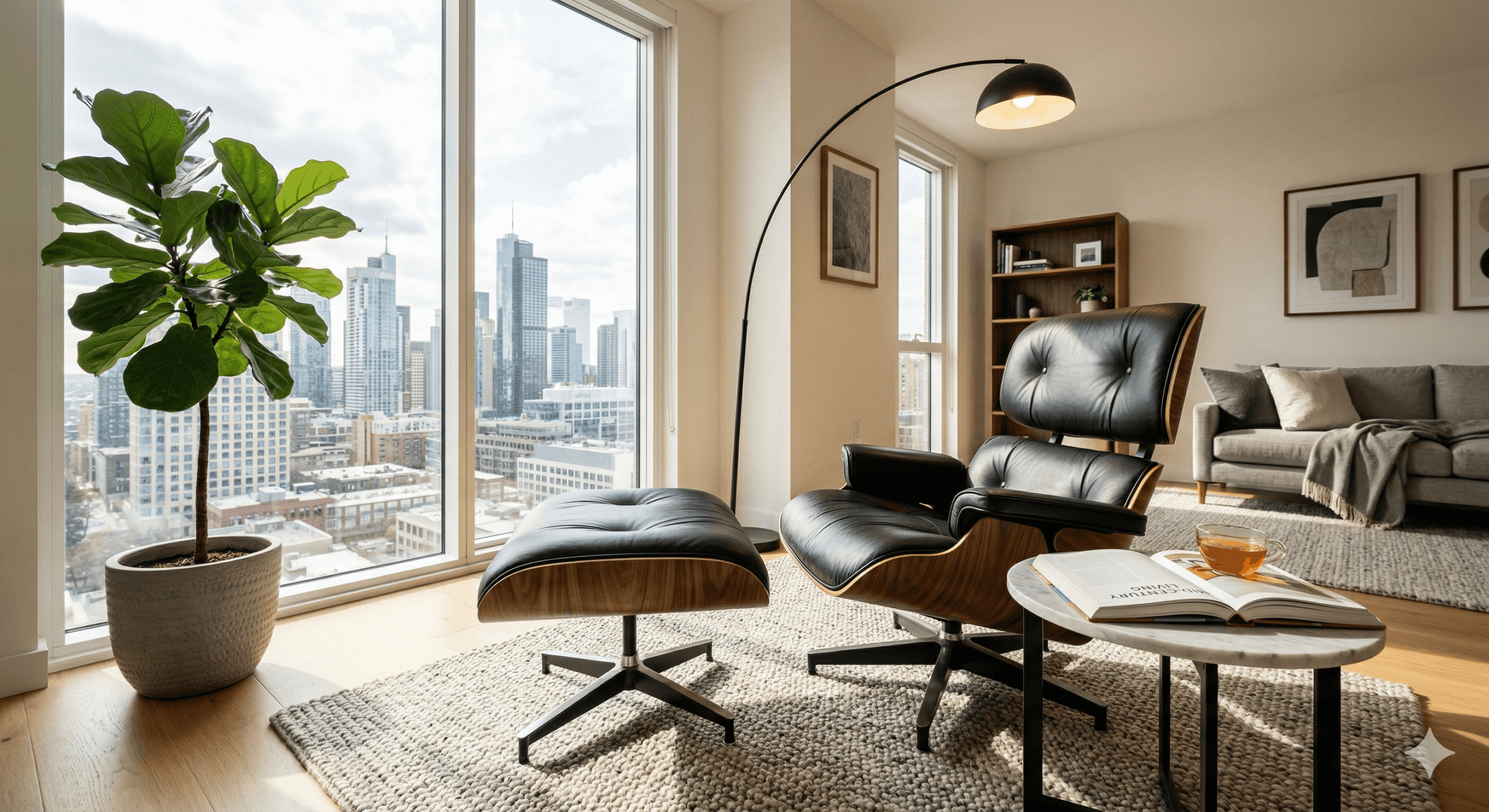
- Matching leather furniture. A sofa and chairs in the same leather as the Eames lounge chair creates a showroom feel rather than a home. The lounge chair works best as a singular material statement. Pair it with sofas in linen, cotton, or boucle — not matching leather.
- Busy or ornate side tables. Heavily decorated, carved, or gilded side tables fight with the chair’s clean lines and always lose. The chair is from 1956. It wants companions from a similar era or an equally considered contemporary sensibility. Simple, honest materials — stone, solid wood, brushed metal.
- Overhead spotlights as the primary light source. Already mentioned in the lighting section, but worth repeating here. Ceiling spotlights make the chair look like a product in a shop rather than a piece of furniture in a home.
- A television directly in the chair’s eyeline. The lounge chair is not a television-watching chair. Its recline angle, the depth of the cushions, and the distance it puts between you and a screen make extended television watching uncomfortable. Place it perpendicular to the screen, not facing it.
- Too many cushions on the floor around it. The Eames lounge chair is complete. It does not need a floor cushion, additional scatter pillows around the rug, or a blanket ladder positioned nearby. These additions signal that the chair itself is not enough — and it is enough.
- Placement over underfloor heating vents. If your apartment has underfloor heating, avoid placing the chair directly over a high-output vent. Sustained dry heat can cause the leather to lose its natural oils and the wood veneer to micro-crack over time. Keep it at least 50cm away from primary heat sources.
9. Companion Furniture — What to Pair It With
The Eames lounge chair plays well with specific kinds of furniture and less well with others. Here is the shortlist of companions that consistently work:
- A teak or walnut credenza or sideboard. The horizontal, low-slung credenza is the Eames lounge chair’s natural cousin in mid-century modern design. Placed on an adjacent wall, it completes the era without creating competition. Keep the top of the credenza edited — three or four objects maximum, arranged with intent.
- A tulip or pedestal side table. Saarinen’s tulip table (and our own tulip-inspired pieces) share the same design philosophy as the Eames lounge chair — organic form, honest materials, mid-century precision. A tulip side table beside the lounge chair is a genuinely historical pairing; both were designed within years of each other as part of the same cultural moment.
- A Noguchi-style coffee table. The organic, sculptural Noguchi table is another natural companion. Its free-form shape and glass surface contrast with the Eames chair’s precision without fighting it. Place it in front of the sofa, not directly beside the lounge chair.
- A floor-to-ceiling bookshelf behind or beside the chair. Books add warmth, texture, colour, and personality to any room — and they are particularly good companions for the lounge chair, which invites exactly the kind of reading and thinking that a good bookshelf supports. Built-in shelving or a simple plywood Ikea Kallax painted in a complementary colour both work.
10. Plants — The Right Ones, in the Right Place
Indoor plants and the Eames lounge chair have always had a natural affinity. Mid-century modern design as a movement was deeply interested in the relationship between interior and exterior space, and bringing nature inside was part of the same cultural moment that produced the chair itself.
The most effective plants to place beside or near an Eames lounge chair are those with simple, sculptural forms — plants that look architectural rather than wild. A fiddle-leaf fig in a matte ceramic pot. A snake plant in a slim concrete planter. A large-leafed monstera in a natural wicker basket. A simple olive tree or lemon tree for European homes with good light and access to outdoor space during summer.
Avoid very small plants clustered together near the chair — a collection of succulents on the side table, for example. The scale feels wrong beside a substantial piece of furniture. One large plant is worth ten small ones in this context.
11. Seasonal Restyling — How to Change the Mood Without Changing the Chair
One of the most enjoyable things about the Eames lounge chair is how easily it changes character with simple additions and removals. The chair itself does not move. Everything around it does.
For winter and dark months: Add a throw blanket draped over the arm — wool, cashmere, or a chunky knit in a warm tone. Switch the lamp to a warmer bulb (2700 Kelvin). Add a candle or two on the side table rather than books. Bring in a slightly heavier rug underfoot. This takes two minutes and completely changes the feel of the setup from considered to genuinely cosy.
For spring and summer: Remove the throw. Switch to a lighter, finer weave rug or remove the rug entirely if you have beautiful wooden or stone floors. Swap the heavy pot plant for something lighter and fresher — a vase of eucalyptus or dried grasses, or a slim-leafed plant rather than a large tropical one. Open the window. Let the light in. The chair in summer light, particularly with a light leather colour like cream or tan, looks lighter than it does in winter.
12. The Ottoman — Don’t Underestimate Its Styling Role
The ottoman is often treated as an accessory, but visually, it is the anchor. Without it, the Eames lounge chair ‘floats’ in the room. With it, you create a dedicated architectural zone. It transforms a piece of furniture into a destination
The ottoman does two jobs simultaneously: it extends the comfort of the chair into a full recumbent position, and it anchors the entire composition in the room. Without the ottoman, the chair floats visually. With it, the chair has weight and presence and clearly belongs where it is placed.
The correct positioning is roughly 30 to 40 centimetres in front of the chair — enough space for comfortable leg extension without the ottoman drifting so far it looks disconnected. The top of the ottoman should be roughly the same height as the seat of the chair, or very slightly lower. Both the chair and ottoman will have a consistent finish — our Eames lounge chair and ottoman replica sets always match in leather and veneer as a complete, designed pair.
When the chair is unoccupied, a folded throw on the ottoman, or a single good book placed face-down, signals that this is an occupied, lived-in space rather than a display piece. That is the difference between a home that looks styled and a home that feels real.
The Colours — A Quick Styling Reference
| Leather Colour | Best Room | Ideal Companions | Mood Created |
|---|---|---|---|
| Black | Living room, study | Natural linen, raw wood, brass lamp, large plant | Architectural, confident |
| Tan / Cognac | Any room — most versatile | Warm neutrals, walnut furniture, wool rug, warm light | Warm, inviting, timeless |
| White / Cream | Light-filled rooms, bedrooms | Minimal objects, one large plant, clean pale walls | Gallery-like, serene |
| Brown / Chocolate | Library, office, bedroom | Deep-toned rug, heavy curtains, layered textures | Rich, considered, personal |
| Olive Green | Living room, open-plan | Natural materials, terracotta, aged metals | Earthy, distinctive, calm |
If you want to understand the technical build quality and materials before you start styling, read our Honest Eames Lounge Chair Replica Review 2026.
Frequently Asked Questions
Does the Eames lounge chair work in a small flat?
Yes — genuinely. Its visual lightness means it takes up less visual space than its physical footprint suggests. In a room of fifteen to twenty square metres, replacing a second armchair with an Eames-style lounge chair almost always improves both the look and the comfort of the space. The key is angles — never push it flat against a wall, always place it at a slight diagonal so it faces into the room.
Should the chair face the television or the room?
The room, almost always. The Eames lounge chair is not a television chair. Its recline angle and cushion depth are optimised for reading, thinking, and conversation — not screen watching. Place it perpendicular to the television so it creates a distinct zone rather than a third viewing seat.
What rug size works best under an Eames lounge chair?
A rug of roughly 160 by 230 centimetres is large enough for the chair, ottoman, and a side table while still defining the zone clearly. If you want the rug to anchor a larger seating arrangement — chair, sofa, and coffee table — go larger at 200 by 300 centimetres. The front legs of all the seating should be on the rug. The back legs can be off it.
How do I make the chair look right in a very modern or contemporary interior?
The Eames lounge chair is one of the few mid-century pieces that integrates naturally into contemporary interiors without looking incongruous. The key is to not surround it with other vintage or retro pieces — instead, let it be the single historical reference in an otherwise contemporary room. A sleek minimalist sofa, a concrete or marble coffee table, abstract contemporary art on the walls — the lounge chair sits within all of that with perfect ease.
Ready to Style Yours?
The chair that works in every room, in every home, in every country in Europe — it does not need much to look its best. It needs space, one good lamp, one honest side table, and something living nearby. That is it. The rest is yours.
Explore our full Eames lounge chair replica collection — every leather and wood combination from the styling guide above is available, with the matching ottoman always included and EU delivery on every order. Find the version that suits your home, your room, and the corner you have had your eye on.
Your favourite chair. Your favourite corner. Your favourite part of the day.
Recommended Products
-
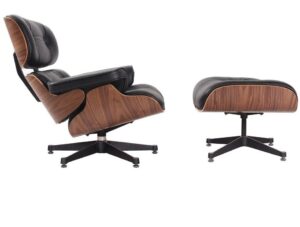
Eames Lounge Chair and Ottoman Replica – Black Leather with Walnut Wood
Original price was: €1.170,00.€640,00Current price is: €640,00. -
Eames Lounge Chair and Ottoman Replica – Brown Leather & Rose wood Veneer
Original price was: €1.170,00.€635,00Current price is: €635,00. -
Eames Lounge Chair and Ottoman Replica – Black Leather with Walnut & Elephant Base
Original price was: €1.175,00.€660,00Current price is: €660,00.